


WhatsApp commerce has moved well beyond order updates and customer support for Indian D2C brands, into a genuine acquisition and sales channel in its own right. GoKwik’s WhatsApp Commerce Intelligence Report 2026, based on an analysis of 26 billion messages sent by more than 1,800 D2C brands across four quarters, found that 83 percent of all WhatsApp-driven orders placed during the October-December 2025 festive quarter came from first-time buyers, not returning customers. Brands actively using WhatsApp marketing tools recorded median gross merchandise value growth 2.25 times higher than brands that didn’t. For a channel long treated as a support afterthought, that’s a meaningful shift in how it’s actually being used.
Key takeaways (The TL;DR)
- GoKwik’s 2026 analysis of 26 billion WhatsApp messages across 1,800-plus D2C brands found 83 percent of WhatsApp-driven orders in the 2025 festive quarter came from first-time buyers, showing WhatsApp is increasingly an acquisition channel, not just a retention tool.
- Brands using WhatsApp marketing tools saw median GMV growth 2.25 times higher than brands that didn’t, and automated customer journeys delivered an average click-through rate of 11.1 percent over the year.
- Click-to-WhatsApp ads, which open a chat instead of a landing page, are reported to bring D2C brands customer acquisition costs meaningfully below standard web landing page campaigns.
- The performance gap is increasingly between brands using AI-driven, contextual messaging and brands still relying on mass broadcast campaigns, with the former converting at a noticeably higher rate.
WhatsApp Has Become an Acquisition Channel, Not Just a Retention Tool
The traditional view of WhatsApp in ecommerce was narrow: order confirmations, delivery updates, and post-purchase support. GoKwik’s data complicates that picture significantly, showing that during the 2025 festive quarter, the large majority of WhatsApp-driven orders on its network came from customers who had never bought from that brand before. Fashion brands were the largest contributors to WhatsApp-driven revenue in the report, with top performers converting at close to 2.5 times the category average, suggesting the channel rewards brands that treat it as a genuine sales surface rather than a support inbox.
Click-to-WhatsApp Ads: Turning a Click Into a Chat, Not a Landing Page
Click-to-WhatsApp ads are Meta ads that open a WhatsApp conversation directly instead of sending a shopper to a website. The appeal for D2C brands is straightforward: a slow-loading mobile landing page is one of the biggest sources of lost conversions in Indian ecommerce, and a chat interface loads instantly and keeps the interaction inside an app the customer already trusts. Reports from agencies running these campaigns describe customer acquisition costs meaningfully below equivalent web landing page campaigns, and because every click captures a contact, the same conversation can be used for remarketing later, something a bounced landing page visit never allows.
The Catalog and In-Chat Checkout
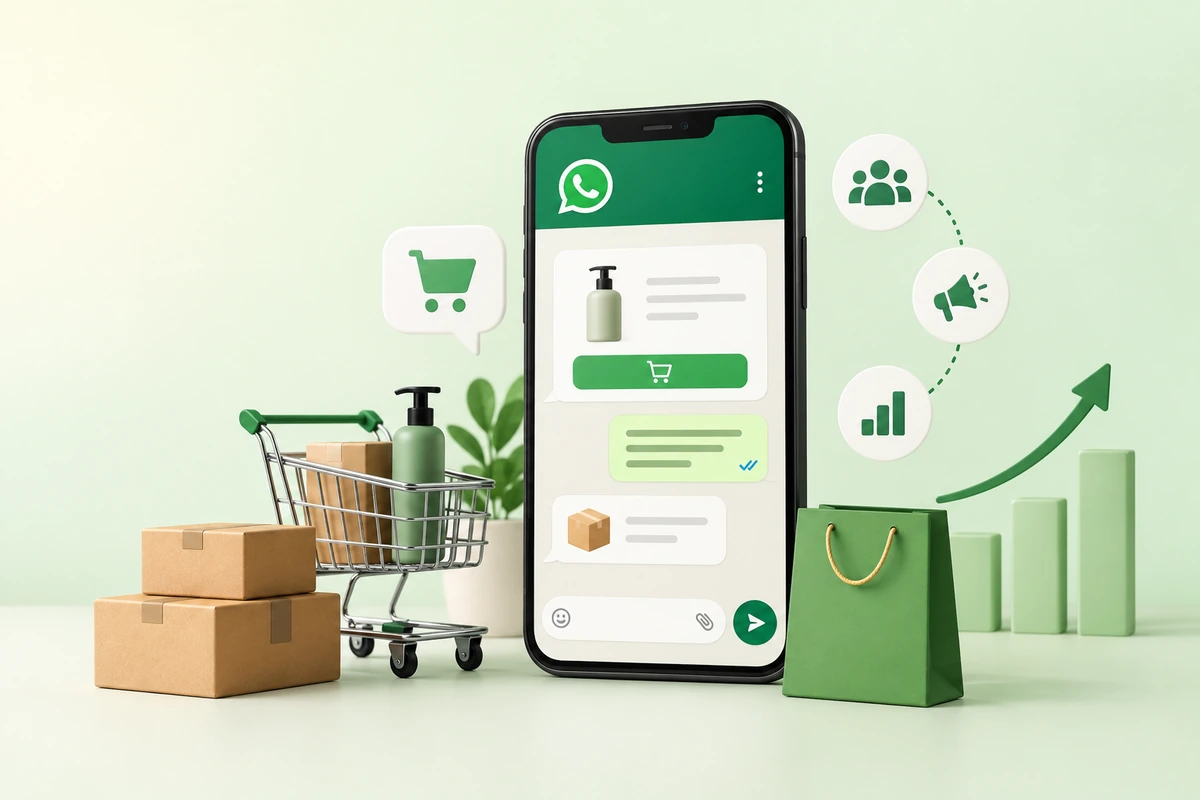
WhatsApp’s Business Platform lets a brand build a product catalog directly inside the chat, showing images, prices, and descriptions without the customer ever leaving the conversation. Paired with UPI payment links or a payment gateway integration, this lets a shopper browse, ask a question about sizing or delivery, and complete a purchase in a single thread. For categories like jewellery, apparel, and supplements, where a customer often has a quick question before buying, this conversational flow can outperform a standard website checkout specifically because it resolves hesitation in real time instead of losing the customer to a support ticket or an abandoned cart.
Automation Is What Separates Top Performers From the Rest
GoKwik’s report draws a clear line between brands sending mass broadcast campaigns and brands using AI-driven automation to decide which message goes to which customer and when. Automated journeys, abandoned-cart reminders, order updates, loyalty prompts, and login nudges, delivered an average click-through rate of 11.1 percent across the year on the brands studied. That gap matters because broadcast-style messaging at scale tends to degrade engagement over time, while contextual, behavior-triggered messages keep performing because they’re relevant to where a specific customer actually is in their journey.
Where WhatsApp Helps Beyond the Sale
WhatsApp’s usefulness for Indian D2C brands extends past the initial purchase. Cash-on-delivery remains common in Indian ecommerce, and return-to-origin, orders that are shipped but refused or unreachable at delivery, is one of the industry’s most expensive operational problems. Some brands report meaningful reductions in RTO rates after adding a WhatsApp confirmation step before dispatch, since a quick chat-based confirmation catches unreachable or uncertain orders before they’re shipped, rather than after.
How AKOI Approaches This
AKOI’s social media and D2C marketing team builds WhatsApp into a brand’s broader customer journey, from click-to-WhatsApp ad campaigns through catalog setup and automated post-purchase flows, so the channel works as a connected part of the funnel rather than an isolated support line.
Conclusion
WhatsApp commerce in India has outgrown its original role as a support channel, and the brands seeing the strongest results are treating it as a core part of acquisition and sales, not an add-on. Meta’s own WhatsApp Business Platform resources are a useful starting point for brands building this out for the first time. Getting real results means pairing the platform’s native tools, catalogs, click-to-WhatsApp ads, automated flows, with the same behavioral targeting discipline a brand would apply to any other paid channel.
Frequently Asked Questions
Is WhatsApp mainly used for customer support or actual sales?
Increasingly for actual sales. GoKwik’s 2026 report found 83 percent of WhatsApp-driven orders during the 2025 festive quarter came from first-time buyers, showing the channel has become a genuine acquisition tool for many Indian D2C brands, not just a support line.
What are click-to-WhatsApp ads?
Click-to-WhatsApp ads are Meta ads that open a WhatsApp conversation directly instead of sending a shopper to a website landing page, and they’re reported to bring customer acquisition costs meaningfully below standard landing page campaigns for many D2C brands.
Can customers actually buy a product inside a WhatsApp chat?
Yes. WhatsApp’s Business Platform supports product catalogs shown directly in the chat, and paired with UPI or a payment gateway link, a customer can browse, ask questions, and complete a purchase without leaving the conversation.
Does automation actually improve WhatsApp marketing results?
According to GoKwik’s analysis, brands using AI-driven, contextual automation instead of mass broadcast campaigns saw meaningfully better engagement, with automated journeys like abandoned-cart reminders and loyalty prompts averaging an 11.1 percent click-through rate over the year.
Can WhatsApp help reduce return-to-origin (RTO) on cash-on-delivery orders?
Some brands report meaningful RTO reductions after adding a WhatsApp confirmation step before dispatch, since it catches unreachable or uncertain customers before an order ships rather than after it’s already been returned.
Which categories benefit most from WhatsApp commerce in India?
Fashion brands were the largest contributors to WhatsApp-driven revenue in GoKwik’s 2026 report, though categories like jewellery and supplements, where customers often have quick pre-purchase questions, also tend to benefit from the conversational, in-chat buying experience.