


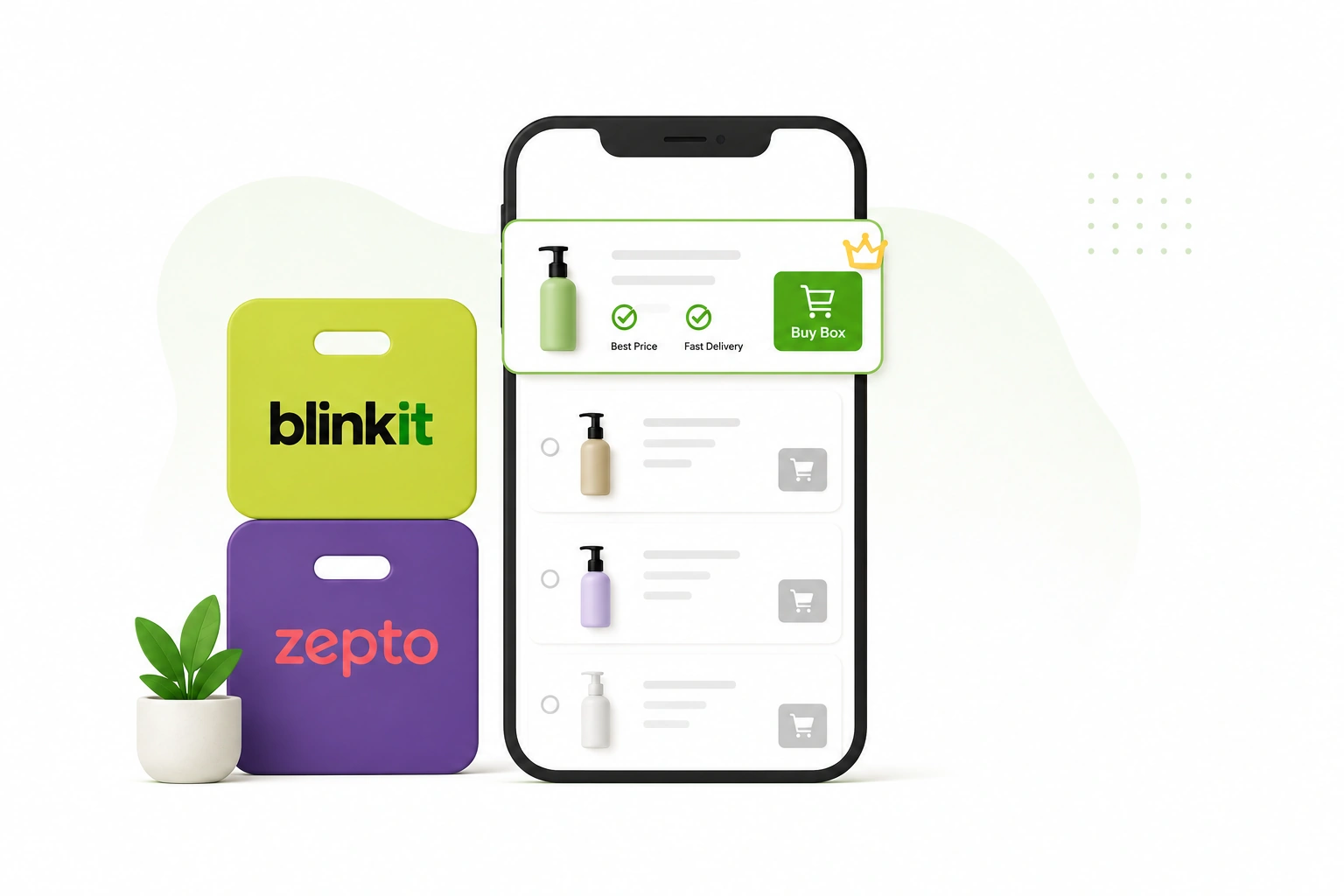
Winning the buy box on Blinkit and Zepto doesn’t work quite the way it does on Amazon, where multiple sellers compete for the same listing. On quick commerce platforms, a brand’s real fight is for organic search placement and dark-store visibility, being the product a shopper actually sees and gets delivered within minutes, rather than a hidden alternative buried further down the results. The mechanics are different, but the stakes are the same: the difference between winning that visibility and losing it can be the difference between a SKU that scales and one that quietly stalls.
Key takeaways (The TL;DR)
- Fill rate, the percentage of a platform’s purchase order a seller fulfils on time and in full, is one of the most important operational metrics on both Blinkit and Zepto, since dropping below roughly 80 to 90 percent can trigger algorithmic demotion.
- Sales velocity, units sold per day within a store’s delivery catchment, is the primary organic ranking signal on both platforms, more influential than most listing-level optimizations.
- Reviews matter early. Getting a brand’s first 30 to 50 reviews within the first 60 days of going live is one of the highest-leverage things a seller can do for long-term visibility.
- Pricing needs to sit close to the category average rather than necessarily being the cheapest, since consistent overpricing quietly drags down conversion and, over weeks, organic rank.
Both Blinkit and Zepto operate as curated, single-seller-per-listing platforms rather than open marketplaces, so there isn’t a literal multi-seller buy box to compete for the way there is on Amazon. What sellers are actually competing for is algorithmic visibility: showing up near the top of a category or search result, staying in stock in the specific dark stores that serve high-demand pincodes, and avoiding the automated demotions that come from operational slip-ups.
Fill Rate Is the Metric That Decides Everything
Fill rate measures how much of a platform’s purchase order a brand actually delivers, on time and in full, to a given dark store. If Blinkit or Zepto orders 50 units for a store and only 43 arrive on schedule, that’s an 86 percent fill rate for that order. Sellers widely report that once a store’s fill rate drops to around 80 percent or below, the platform’s algorithm responds by demoting the listing in that pincode specifically, cutting organic rank and ad visibility, sometimes triggering deeper suppression. Because this is tracked per SKU per city, a strong national fill rate can still mask a serious localized problem in a few high-demand stores, which is exactly where lost visibility tends to start.
Sales Velocity and Pricing
Sales velocity, units sold per day in a given catchment, is the single strongest organic ranking signal on both platforms. It rewards products that are already selling well with more visibility, which is why the first few weeks after launch matter disproportionately: early momentum compounds. Pricing plays into this indirectly. A product priced meaningfully above the category average for an equivalent pack size tends to convert less, and lower conversion feeds lower velocity. The rank penalty for overpricing isn’t immediate, but it accumulates over weeks as the platform’s velocity data builds up against the brand.
Reviews and Ratings in the First 60 Days
The earliest reviews a listing collects matter more than almost anything else a brand does in its first two months live. Getting to 30 to 50 reviews quickly, often through a short-term launch promotion combined with sponsored placement to drive initial volume, tends to be more valuable than any other single early investment, homepage banners included. Responding to every review, positive or negative, also factors into some platform placement decisions, since it signals operational maturity to both the algorithm and the next shopper reading through feedback.
Listing Quality and Compliance Basics
Before any of the ranking factors come into play, a listing has to clear basic compliance: accurate MRP, net weight, batch number, and FSSAI marking for food categories, plus product images that meet each platform’s style requirements. Missing or inconsistent catalog fields, an incorrect EAN or HSN code, a mismatch between GST registration details and application data, are common causes of listing rejection or delay during onboarding, which typically takes four to eight weeks from application to going live on either platform.
How AKOI Approaches This
AKOI’s quick commerce marketing team tracks fill rate and sales velocity at the individual store level across Blinkit, Zepto, Swiggy Instamart, Amazon Now, Flipkart Minutes, and BigBasket, rather than relying on a brand-wide average that can hide a localized problem until it has already cost weeks of rank.
Conclusion
Winning visibility on Blinkit and Zepto comes down to operational discipline more than clever listing tricks: keep fill rate high, price close to the category, and get those first reviews in quickly. Blinkit’s own seller platform is the starting point for onboarding details, but the real work of protecting rank happens after a listing goes live, in the store-by-store fulfilment data most sellers don’t check closely enough.
Frequently Asked Questions
What is fill rate on Blinkit and Zepto?
Fill rate is the percentage of a platform’s purchase order that a seller fulfils on time and in full for a specific dark store. It’s tracked per SKU per city and is one of the most important factors in maintaining organic rank.
What happens if my fill rate drops too low?
Sellers widely report that a fill rate dropping to around 80 percent or below can trigger algorithmic demotion in that specific pincode, reducing organic rank and ad visibility, and in severe cases causing deeper listing suppression.
Do Blinkit and Zepto have a Buy Box like Amazon?
Not in the same sense. Both platforms operate as curated, single-seller-per-listing models, so the real competition is for organic search placement and dark-store visibility rather than a shared listing multiple sellers bid for.
How important are reviews when launching a new product on Zepto or Blinkit?
Very important early on. Reaching 30 to 50 reviews within the first 60 days is one of the highest-leverage things a new listing can do, often outweighing other early investments like banner placements.
Does pricing affect ranking on quick commerce platforms?
Indirectly, yes. Pricing significantly above the category average tends to lower conversion rate, which in turn lowers sales velocity, the primary organic ranking factor, though the rank impact builds gradually rather than immediately.
How long does it take to get listed on Blinkit or Zepto?
Onboarding typically takes four to eight weeks from application to a live listing on either platform, though timelines can stretch when category managers are handling multiple onboardings at once.