


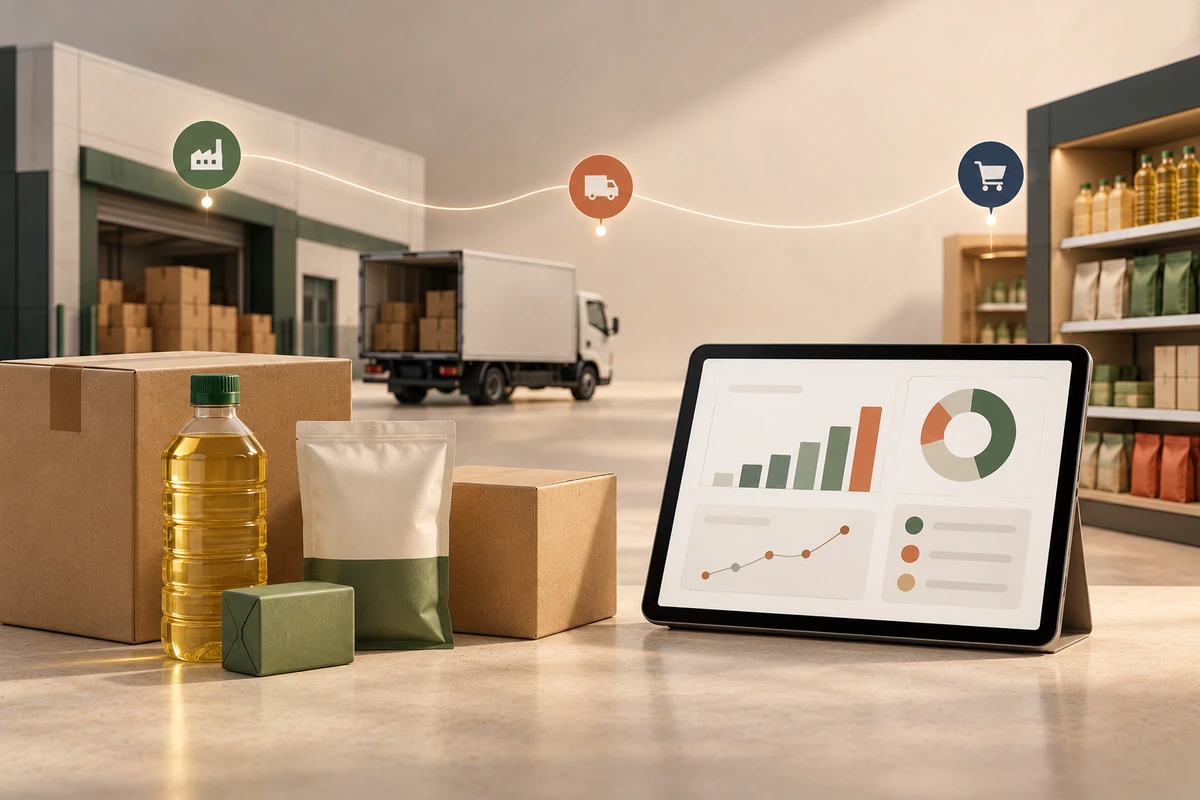
A distribution management system (DMS) is software that lets an FMCG brand see and control what happens between its warehouse and the retailers who sell its products. It records orders, stock, invoices, schemes and claims at the distributor level, so the brand knows what is actually selling, not just what it has shipped. For brands that sell through many distributors across states, this view is often the difference between planning with facts and planning with guesses. This guide explains what a DMS does, how it differs from ERP and sales force tools, and how to choose one.
Key takeaways (The TL;DR)
- A distribution management system tracks orders, stock, invoices, schemes and claims at the distributor level, and shows secondary sales, meaning what distributors sell to retailers.
- It sits between a brand’s ERP, which records primary sales to distributors, and the market, so it is a different tool from ERP and from field sales apps.
- Traditional trade still dominates Indian grocery retail, according to Redseer, which is why distributor-level visibility matters for FMCG growth.
- Choose a DMS on ERP integration, GST-ready invoicing, offline use, claims handling and distributor adoption, and test it with a pilot before a full rollout.
What a DMS Is and How It Differs From ERP and SFA
Most FMCG brands sell to distributors, and distributors sell to retailers. The brand’s ERP records the first step, known as primary sales. Without a DMS, the second step, known as secondary sales, is often reported late through spreadsheets, calls and distributor summaries. A DMS closes that gap by capturing each distributor’s sales, stock and claims as they happen.
| System | What it handles | Typical users |
| ERP | Finance, purchasing, production, primary sales to distributors | Finance, supply chain, management |
| DMS | Distributor orders, stock, invoices, secondary sales, schemes and claims | Distributors, regional and sales managers |
| SFA (sales force automation) | Field rep visits, retailer orders, beat plans and attendance | Sales representatives and their managers |
The three work best when they share data. A DMS without ERP links creates double entry, and an SFA without a DMS cannot show whether an order was actually fulfilled.
Why FMCG Brands Need Distributor-Level Visibility
A Redseer analysis of India’s FMCG market estimates that around 85 to 90 percent of mass grocery retail in India is still driven by traditional trade, with an estimated 13 to 14 million kirana stores. Redseer also notes that quick commerce and modern trade are growing from a smaller base, so most brands will keep serving several formats at once. For a brand, that means a long chain of distributors and retailers, and plenty of places where information can be lost.
Common problems without a DMS include stock piling up at one distributor while another runs out, scheme claims that are hard to verify, slow reporting of what sold in a territory, and no early warning when stock is pushed into the channel faster than it sells out.
Core Functions of a Distribution Management System
- Order and invoice management: capture retailer orders and produce GST-ready invoices.
- Inventory visibility: stock by SKU at each distributor, including near-expiry and damaged goods.
- Secondary sales tracking: a live record of what each distributor sells to retailers.
- Scheme and claim management: set trade schemes and check claims against recorded sales.
- Credit and collections: credit limits, outstanding balances and overdue alerts.
- Reports: sales by territory, SKU, distributor and retailer, so managers can act early.
Benefits for Brands and Distributors
Brands gain a clearer picture of actual market demand, fewer disputed claims and less manual reconciliation. Distributors gain faster billing, tidier stock records and quicker claim settlement. Managers can spot slow-moving SKUs, weak territories and stock-outs sooner, and adjust schemes before problems grow.
Challenges to Plan For
The hardest part is usually distributor adoption, not the software. Distributors already have their own billing tools, and some work in areas with weak connectivity. Data quality depends on every invoice being entered correctly, and teams need training and a clear reason to change how they work. Plan for offline use, a phased rollout and support for distributors, and treat the first few months as a pilot.
How to Choose a DMS: A Checklist
- Does it integrate with your ERP, and with your SFA if you use one?
- Does it produce GST-compliant invoices and handle your tax setup?
- Does it work offline and on the devices your distributors actually use?
- Can it manage your scheme types and claims workflow?
- Does it give the reports your managers use today, without extra manual work?
- What training, onboarding and support do distributors receive?
- What does it cost in total, including setup, per-distributor fees and customisation?
- Can you run a pilot with a few distributors before committing?
Because software contracts carry legal and data obligations, have your lawyer review the agreement, including data ownership and exit terms.
Connecting DMS Data to Your Marketing
Distributor data is also a marketing asset. Knowing which territories and SKUs are growing, and where stock is available, helps you decide where to run retail activations, trade promotions and local campaigns. It also helps with online channels: if a product is strong in a city’s general trade, it may justify a push on Blinkit, Zepto, Swiggy Instamart, Amazon Now, Flipkart Minutes or BigBasket in the same city. Quick commerce and marketplace sales sit outside most DMS tools, so brands often combine the two data sets in their own reports.
Where AKOI Fits
AKOI is a marketing agency, not a software vendor, so the choice of DMS belongs with your sales, supply chain and IT teams. Where we help is on the demand side: our retail marketing and quick commerce and marketplace marketing work helps FMCG and D2C brands turn distribution strength into visibility and sales. If you are planning how general trade, modern trade and online channels should work together, we are happy to talk.
Frequently Asked Questions
What is a distribution management system?
A distribution management system is software that records orders, stock, invoices, schemes and claims at the distributor level, giving a brand a live view of secondary sales, meaning what distributors sell to retailers.
What is the difference between a DMS and an ERP?
An ERP manages the company’s finance, purchasing, production and primary sales to distributors. A DMS manages what happens at the distributor and retailer level. They should share data.
What is the difference between a DMS and SFA?
An SFA tool supports field sales reps with beats, visits and retailer orders. A DMS records distributor stock, billing and claims. Many brands use both together.
Does a small FMCG brand need a DMS?
Not always. A brand with a few distributors may manage with simple reporting. A DMS becomes more useful as distributors, territories and schemes multiply.
How much does a DMS cost?
Pricing varies by vendor, number of distributors, modules and customisation. Ask for the total cost including setup, per-distributor fees and support, and compare it against the manual work and disputes it removes.
Can a DMS cover quick commerce and marketplace sales?
Most DMS tools focus on distributor-led general and modern trade. Quick commerce and marketplace data usually comes from the platforms themselves, so brands often combine the two in their reporting.