


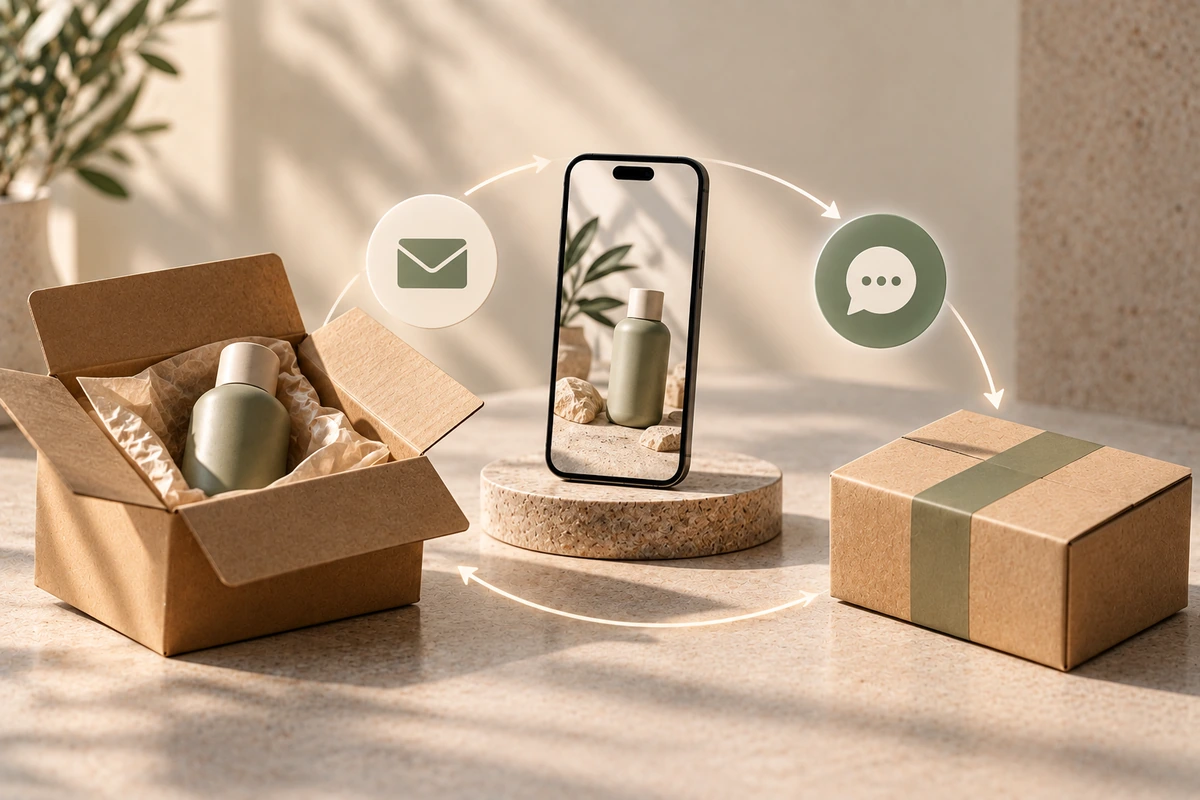
Email and WhatsApp marketing for D2C brands matters most in the window right after a sale, not before it. Widely cited Bain & Company research from Fred Reichheld found that a 5 percent increase in customer retention can increase profits by 25 to 95 percent, yet one industry estimate puts the share of first-time D2C buyers in India who never make a second purchase at 77 percent. Most D2C marketing budgets are still weighted almost entirely toward acquisition, while the lifecycle flows that turn a one-time buyer into a repeat customer, welcome, post-purchase, and win-back, are often the last thing built and the first thing neglected.
Key takeaways (The TL;DR)
- Widely cited Bain & Company research found that a 5 percent increase in customer retention can increase profits by 25 to 95 percent, making retention one of the highest-leverage levers available to a D2C brand.
- Automated lifecycle email flows, welcome, abandoned cart, post-purchase, and win-back, consistently generate far more revenue per recipient than one-off campaign sends, and typically see meaningfully higher open rates too.
- The first 72 hours to 14 days after a purchase is one of the most neglected windows in D2C marketing, even though it’s when a customer either forms the habit of using a product or quietly churns.
- WhatsApp and email serve different roles in a retention system: WhatsApp works best for time-sensitive, high-urgency touches, while email carries longer-form content like product education and loyalty communication.
Why the First 72 Hours After Purchase Matter More Than the Sale Itself
The period immediately following a purchase is when a customer either builds the habit of actually using a product or quietly drifts away, and it’s consistently the most underleveraged part of the D2C customer journey. Many brands have a functioning abandoned cart sequence but stop there, sending little more than a shipping confirmation and a review request once the sale closes. A structured post-purchase sequence, onboarding content, usage guidance, and a well-timed check-in, does more to determine whether a customer returns than almost any acquisition tactic, since it addresses the actual reason repeat purchases happen: the product worked and the customer remembers why they bought it.
The Five Lifecycle Flows Every D2C Brand Needs
Retention email marketing consistently comes down to five foundational, automated flows: a welcome series for new subscribers, an abandoned cart sequence to recover incomplete purchases, a post-purchase sequence to drive product usage and reduce early churn, a win-back flow for customers who’ve gone quiet, and a browse abandonment flow for high-intent visitors who didn’t add anything to cart. These flows are built once and run continuously, and they consistently outperform one-off promotional campaigns on both open rate and revenue generated per recipient, since they’re triggered by actual customer behavior rather than sent to an entire list at once. Most D2C brands have the abandoned cart flow live; far fewer have a genuinely built-out post-purchase or win-back sequence, which is exactly where the retention gap tends to sit.
Where WhatsApp Fits Differently From Email
Email and WhatsApp aren’t interchangeable channels for retention, they serve different moments in the same lifecycle. Email remains better suited to longer-form content: detailed product education, loyalty program communication, and content that benefits from a full inbox layout rather than a chat bubble. WhatsApp earns its place for genuinely time-sensitive, high-urgency touches, cart abandonment reminders, restock alerts, flash sale windows, since Indian consumers check WhatsApp far more frequently throughout the day than email. Treating WhatsApp purely as a broadcast channel for promotions, rather than a behavior-triggered part of the retention system, is one of the most common ways brands burn through the channel’s engagement over time.
The Vernacular Advantage for Tier 2 and Tier 3 Retention
For brands with meaningful demand outside metro cities, message language is a genuine retention lever that’s frequently overlooked. Hinglish and other vernacular-inflected messaging tends to consistently outperform formal English for Tier 2 and Tier 3 audiences on WhatsApp specifically, driving higher open rates and faster response. This isn’t a matter of translating the same message word for word, it’s writing retention messages in the way that audience actually communicates, which is a meaningfully different task than most brands’ English-first messaging templates are built for.
How AKOI Approaches This
AKOI’s D2C marketing team builds email and WhatsApp lifecycle flows around actual customer behavior, welcome, post-purchase, and win-back sequences tied to real purchase and browsing triggers, rather than treating retention as a series of one-off promotional blasts sent to an entire list at once.
Conclusion
Retention isn’t a softer, less measurable version of acquisition, it’s frequently the more profitable lever, and the research behind that finding has held up for decades across industries. For D2C brands, that means the welcome, post-purchase, and win-back flows deserve the same planning attention as the next acquisition campaign, not the leftover budget once acquisition is funded. Getting the first 72 hours after a sale right is often what decides whether a customer becomes a second-time buyer at all.
Frequently Asked Questions
Which email flows should a D2C brand build first?
A welcome series, an abandoned cart sequence, and a post-purchase sequence are generally considered the foundational three, since they cover the highest-intent moments in the customer journey before a brand adds win-back or browse abandonment flows.
Why is customer retention so valuable compared to acquisition?
Widely cited Bain & Company research found that a 5 percent increase in customer retention can increase profits by 25 to 95 percent, since returning customers typically cost less to serve and spend more over time than newly acquired ones.
Should WhatsApp replace email for D2C retention marketing?
Not entirely. WhatsApp works best for time-sensitive, high-urgency messages like cart abandonment or flash sales, while email remains better suited to longer-form content like product education and loyalty communication.
Why does the post-purchase period matter so much for retention?
The first 72 hours to 14 days after a purchase is typically when a customer either forms the habit of using a product or quietly disengages, making it one of the highest-leverage windows for a brand to influence whether a repeat purchase happens.
Do automated email flows really perform better than regular campaigns?
Yes, consistently. Automated flows are triggered by actual customer behavior rather than sent to an entire list at once, and they typically generate meaningfully higher open rates and more revenue per recipient than one-off promotional campaigns.
Does message language affect WhatsApp retention marketing in India?
Yes. Hinglish and other vernacular-inflected messaging tends to outperform formal English for Tier 2 and Tier 3 audiences specifically, driving higher open rates and engagement than a direct English-language translation of the same message.