


End-to-end E-Commerce Marketing Services in India for D2C Brands
AKOI helps scale your D2C brand across leading e-commerce marketplaces, including Amazon, Flipkart, Myntra, Ajio, Meesho & TATA 1mg. We manage marketplace onboarding, catalog optimization, product visibility, performance advertising, promotions, and account management. With SKU-level analytics, sales insights, inventory monitoring, and marketplace-specific strategies, we identify growth opportunities and optimize performance across the e-commerce ecosystem.
Start E-Com!


eCommerce Platforms We Specialise In


Services we manage under
every eCommerce platforms
 Day-to-Day Account Management
 Competition Tracking
 Product Selection & Assortment
 MIS & Performance Reporting
 Promotion & Deals Planning
 Growth Initiatives
 Pricing & P&L Management
 Ads Management
 Single Point of Contact (POC)
 Catalog Management
 Trade Terms Negotiation
 Platform Co-ordination With Category Managers
 Joint Business Planning (JBP)
 Meta Promotions
 Business Analysis & Insights
 Supply Chain Hygiene Support
- Day-to-Day Account Management
- Product Selection & Assortment
- Promotion & Deals Planning
- Pricing & P&L Management
- Single Point of Contact (POC)
- Trade Terms Negotiation
- Joint Business Planning (JBP)
- Business Analysis & Insights
- Competition Tracking
- MIS & Performance Reporting
- Growth Initiatives
- Ads Management
- Catalog Management
- Platform Co-ordination With Category Managers
- Meta Promotions
- Supply Chain Hygiene Support
AKOI’s Proven E-Commerce
Track Records
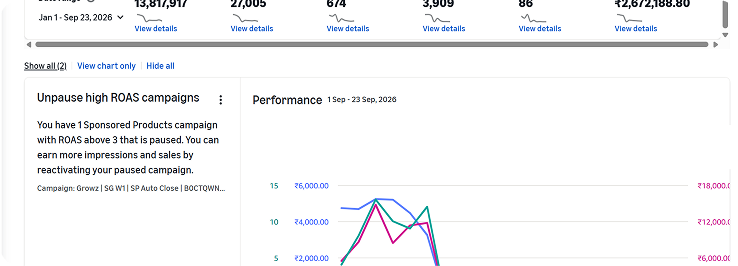
Real performance data from our field-tested e-commerce campaigns. See how AKOI leverages SKU-level analytics, marketplace listing optimization, product visibility, and high-ROAS advertising strategies to scale sales, marketplace presence, and advertising returns for industry partners.
Our eCommerce Case Studies - Proven Results Across India & Global Markets
Behind every successful e-commerce brand is a data-backed growth strategy. AKOI manages the entire e-commerce journey end-to-end, from marketplace onboarding, hygiene analysis and correction, competitor analysis, catalog and listing optimization, and product visibility to Pan-India penetration, campaign optimization, and profitability-focused growth. Our daily run-rate tracking and weekly and monthly reports provide clear visibility into performance and growth opportunities. Read our client success stories to see how we help leading brands scale sales and strengthen marketplace performance across Amazon, Flipkart, Myntra, Ajio, Meesho & TATA 1mg


Why Brands Should Choose
E-Commerce in India?
E-commerce is one of India’s most competitive online retail channels, with millions of customers discovering and purchasing products across platforms like Amazon, Flipkart, Myntra, Ajio, Meesho & TATA 1mg. For brands, winning on these platforms requires more than being listed. It requires strong visibility, effective advertising, sharp marketplace execution, and continuous performance optimization.
AKOI is an E-commerce Marketing Agency focused on driving measurable marketplace growth. We combine marketplace expertise, performance advertising, and data-led analytics to improve product visibility, optimize sales, identify growth opportunities, and strengthen profitability across every stage of the e-commerce journey.
Why Invest in E-commerce?
Reach high-intent customers across leading marketplaces
Strengthen product visibility and discoverability
Drive sales through performance-led advertising

Identify SKU, category, and marketplace growth opportunities
Optimize pricing, inventory, and profitability
Scale marketplace performance with data-backed strategies

Why AKOI as E-Commerce Marketing Agency?
Unlike generic e-commerce marketing agencies that focus primarily on running ad campaigns, AKOI functions as an extension of your e-commerce team. We work closely across marketplace, advertising, catalog, sales, and operations functions on platforms such as Amazon, Flipkart, and other leading marketplaces to improve visibility, drive sales, identify growth opportunities, and build profitable marketplace performance.
01
Direct Marketplace & Platform Alignment
AKOI works closely with marketplace teams and advertising teams to identify growth opportunities, improve platform visibility, resolve issues, and support brand-specific promotions and initiatives.
02
Full-Funnel Execution Beyond Ads
AKOI manages the complete e-commerce journey from awareness to conversions/loyalty, from catalog hygiene and listing optimization to pricing, inventory, promotions, advertising, and sales performance, ensuring marketing investments translate into actual business growth.
03
Inventory & Fulfilment Tracking
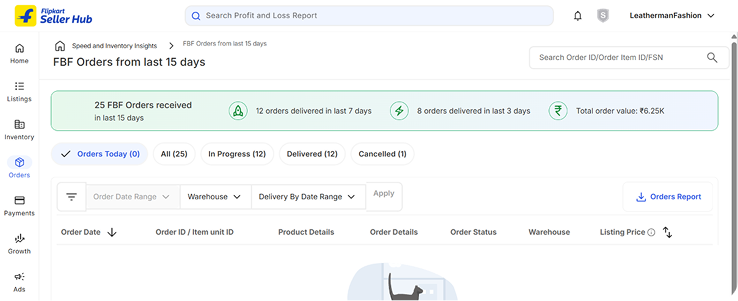
Inventory checks across FBA, 3P Seller, Easy Ship, FBF, Seller Fulfilled to track stock availability, fulfilment status, and replenishment opportunities.
04
End-to-End P&L & Margin Protection
AKOI evaluates sales, discounts, platform fees, advertising spends, and product-level profitability to drive sustainable growth while protecting margins.
05
Data-Driven Joint Business Planning (JBP)
AKOI builds quarterly and annual business plans alongside platform leadership, locking in co-funded campaigns, seasonal event pushes, and exclusive brand visibility.
06
Real-Time Analytics & MIS Reporting
AKOI provides daily, weekly, and monthly tracking of share of voice (SOV), ROAS, keyword ranks, and competitor movements so you always have full visibility into performance.
Our eCommerce Detailed Services
AKOI’s Data-Driven
eCommerce Growth Framework
Brand Onboarding, Audit & Alignment

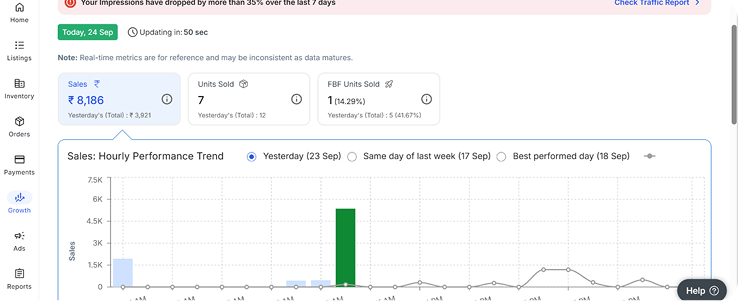
eCommerce Performance
Metrics We Measure & Optimize
Proposed KPIs
| S. No. | KPI Category | KPI | Definition | Measurement Frequency | Ownership |
|---|
Industries We Serve
 FMCG
 Healthcare
 Personal Care
 Baby Care
 Beverages
 Frozen Foods
 Dairy
 Supplements
 Home Care
 Pet Care
 Fashion
 Beauty
Client Testimonials
What Our Clients Say About Our eCommerce Services
As a trusted eCommerce marketing company in India, we have helped brands across India and global markets drive stronger visibility, increased sales, and sustainable growth across leading eCommerce platforms. Our client testimonials reflect our commitment to delivering result-driven eCommerce solutions through a data-driven, performance-focused approach.

Vedant Karwa
Director
COCO Melts
Partnering with AKOI has been a great experience for our eCommerce business. Their strong relationships and understanding of each platform have made it much easier for us to navigate the ecosystem, execute faster, and expand our presence across multiple platforms. Since partnering with them, we have seen consistent growth and stronger performance across our online channels. Their proactive approach, platform expertise, and commitment to our business have made them a valuable partner, and we look forward to growing together and achieving many more milestones.

Get in Touch with the Best eCommerce Company in India



Know More About eCommerce Marketing — Leading eCommerce Agency in India for Brand Growth
eCommerce Marketing Services for Indian Marketplaces
Selling on a marketplace is not the same as having a website. Amazon, Flipkart, Myntra, Ajio, Meesho and TATA 1mg each run their own search engine, their own advertising console, their own catalogue rules and their own category teams. A brand that treats all of them as one channel tends to get the same result everywhere: listings that exist but do not sell. eCommerce marketing is the work of making each platform perform on its own terms — the right assortment, listings built to rank and convert, advertising that respects margin, and stock that is actually available when demand arrives.
Catalogue and Listing Optimisation
Most marketplace growth problems start in the catalogue. A title written for a brochure rather than for search, missing backend attributes, images that fail platform specs, variations split across separate listings, or a product filed under the wrong browse node will all cap performance no matter how much is spent on ads. Listing optimisation means keyword-researched titles and bullets, complete and accurate attributes, compliant imagery, correct variation structures, and A+ or enhanced brand content where the platform supports it. These improve organic ranking and the conversion rate of paid traffic at the same time, which is why they come before campaign work rather than after it.
Marketplace Advertising
Marketplace ad platforms sell sponsored product, sponsored brand and display placements, bid by keyword, product or audience. Campaigns are structured by search intent and by product margin, so a high-margin hero SKU and a low-margin entry product are not competing for the same budget on the same terms. Performance is judged on ACOS and ROAS in the short term and on TACOS — advertising spend against total sales, organic included — over the longer term. TACOS is the number that shows whether advertising is building organic rank or simply renting every order.
Pricing, Margin and Promotions
Pricing on a marketplace has to clear landed cost, platform commission, fulfilment and advertising before it contributes anything. Planning each SKU against its contribution margin makes it clear which products can carry a promotion, which can fund advertising, and which are only worth keeping for range. Prices also have to stay coherent across platforms: a discount on one marketplace that undercuts your own listing on another erodes margin on both, and can trigger price-parity and buy-box problems. Platform-funded events and joint promotions are planned against that same margin picture rather than agreed in isolation.
Availability and Supply Chain Hygiene
An out-of-stock listing loses ranking as well as sales, and recovering a search position costs more than holding it. Availability is tracked as in-stock percentage, order fill rate and replenishment lead time, with purchase orders and inbound shipments followed up before they become stockouts. For brands on the vendor model this also means managing PO acceptance and fill rate with the platform directly, since unfilled orders affect both revenue and the platform’s willingness to forecast your stock.
Reviews, Ratings and Content Quality
Ratings affect conversion and, on most marketplaces, search ranking. A new listing with no reviews converts poorly regardless of how much traffic is sent to it, so launches are planned with platform-compliant review programmes and sampling rather than left to accumulate on their own. Negative feedback is read for cause: sizing, packaging, expectation set by the listing, or genuine product quality each need a different fix. Paid or incentivised reviews are not used — they put the account at risk for a short-lived gain.
Measuring What Matters
Useful marketplace reporting connects platform metrics back to the business. Revenue and growth, active and buyable SKUs, session and conversion rate, share of category, TACOS and ROAS, in-stock percentage, order fill rate and return rate together describe whether the channel is healthy. Returns in particular are worth reading by reason code, because reducing them often improves profit faster than adding traffic. The point of the reporting is to show contribution margin, not gross sales — growth that costs more than it earns is not growth.
Marketplaces and Your Own D2C Website
Marketplaces and an owned website do different jobs. Marketplaces bring reach and customers already in a buying frame of mind; a D2C site holds better margin and gives you first-party customer data. Run without coordination they compete on price and cannibalise each other. Run together, the marketplace becomes the discovery and volume channel while the website builds repeat purchase and customer relationships, with pricing and assortment planned so each supports the other.
Getting Started
Work usually begins with an audit: current platform performance, catalogue health, competitor and pricing research, category opportunity, and where visibility, content, availability or advertising are holding growth back. That produces a prioritised plan — what to fix first, what it should be worth, and how it will be measured — before any spend is committed. If you would like that assessment for your brand, use the contact form on this page.
Ready to Scale Your Brand Across India’s Leading E-Commerce Platforms?
Grow your business with AKOI’s end-to-end E-Commerce Marketing Services. From Amazon, Flipkart, Myntra, Ajio, Meesho & TATA 1mg, we help brands improve visibility, optimize advertising, and drive profitable growth.
Get Your Free Growth ConsultationFrequently Asked Questions (FAQs)
What are eCommerce marketing services?−
eCommerce marketing services cover everything needed to sell profitably on online marketplaces: seller or vendor onboarding, catalogue and listing optimisation, advertising, pricing and promotions, inventory availability, and ongoing account management. The aim is to turn a marketplace listing into a predictable, profitable sales channel rather than a passive storefront.
Which eCommerce platforms does AKOI work with?+
AKOI works across India’s major marketplaces, including Amazon, Flipkart, Myntra, Ajio, Meesho and TATA 1mg. Each platform has its own catalogue rules, advertising console, commission structure and category teams, so the strategy is built per platform rather than copied across all of them.
How is eCommerce marketing different from quick-commerce marketing?+
Quick-commerce is built around a small, fast-moving assortment delivered from local dark stores within minutes, so availability by pin code drives everything. eCommerce marketplaces carry a far deeper national catalogue shipped from fulfilment centres, where content quality, reviews, search ranking and advertising efficiency matter most. The channels need different assortments, pricing and ad strategies.
What does catalogue or listing optimisation involve?+
It covers the elements that decide whether a product is found and then bought: keyword-researched titles, bullet points and descriptions, compliant and high-quality images, complete backend attributes, category and browse-node placement, variation structures, and A+ or enhanced brand content. Strong listings improve both organic search ranking and the conversion rate of paid traffic.
How does marketplace advertising work?+
Marketplaces run their own ad platforms — sponsored product, sponsored brand and display placements bid on by keyword, product or audience. Campaigns are structured by intent and margin, then optimised on ACOS or ROAS. Because ad performance and organic ranking reinforce each other on most marketplaces, ads are managed alongside listings rather than separately.
What is ACOS, TACOS and ROAS?+
ROAS (Return on Ad Spend) is revenue divided by ad spend. ACOS (Advertising Cost of Sale) is the inverse, expressed as a percentage of ad-attributed sales. TACOS (Total ACOS) measures ad spend against total sales, including organic. TACOS is the more useful long-term measure, because it shows whether advertising is building organic momentum or simply buying every order.
How long does it take to see results on a marketplace?+
Advertising and pricing changes can move sales within days. Listing quality, reviews, search ranking and category authority build over weeks and months. A realistic view is early gains from ads and availability fixes in the first month, with compounding organic performance developing across a quarter or more depending on the category and competition.
Do I need to be a brand owner to sell on these platforms?+
Not necessarily, but brand registry or brand authorisation unlocks most of what makes marketplace marketing effective — A+ content, brand stores, sponsored brand ads and protection against listing hijacking. Registering the trademark and enrolling in each platform’s brand programme is usually one of the first steps.
What is the difference between a marketplace and vendor model?+
On the seller or marketplace model you list, price and ship the product yourself and keep control of margins. On the vendor or wholesale model the platform buys stock from you and controls the retail price. They differ in margin structure, pricing control, and which levers are available, so the choice affects the entire growth plan.
How is pricing managed across multiple platforms?+
Pricing is planned against landed cost, platform commission, fulfilment and advertising, so each SKU has a known contribution margin. Prices then need to stay consistent enough across platforms to avoid undercutting your own listings or triggering buy-box and price-parity issues, while still allowing for platform-funded events and promotions.
How do product reviews and ratings affect sales?+
Ratings influence both conversion and search ranking on most marketplaces, and a new listing with no reviews converts poorly regardless of ad spend. Reviews are built through platform-compliant programmes, product sampling at launch, and resolving the quality or packaging issues behind negative feedback — never through paid or incentivised reviews, which risk account suspension.
What causes a listing to lose visibility or the buy box?+
The usual causes are going out of stock, uncompetitive pricing, poor seller performance metrics, listing suppression for content or compliance reasons, or another seller winning the buy box on the same ASIN. Monitoring availability and listing health daily is what keeps these from quietly costing a week of sales.
What is A+ content and is it worth it?+
A+ or enhanced brand content replaces the plain product description with a richer layout of images, comparison tables and brand storytelling. It typically improves conversion rate and reduces returns by setting accurate expectations, which makes it one of the higher-return one-off investments on a listing.
How do you handle returns and RTO?+
Returns are tracked by reason code, so the difference between a sizing problem, a listing that oversells, a packaging failure and a genuine quality issue is visible. Each has a different fix — content, packaging, or assortment. Reducing returns usually improves profitability faster than increasing traffic.
Which metrics should a brand actually track?+
Revenue and growth, active and buyable SKUs, session and conversion rate, share of category, TACOS and ROAS, in-stock percentage, order fill rate and return rate. Reporting should connect these back to contribution margin, so growth is measured in profit rather than in gross sales alone.
Can you manage both marketplace and D2C website growth?+
Yes. Marketplaces and an owned D2C site serve different roles — marketplaces provide reach and high-intent demand, the website provides margin and first-party customer data. Working them together avoids the two channels competing on price and lets each do what it is best at.
What does onboarding a new brand involve?+
A platform and category audit, competitor and pricing research, assortment and hero-SKU selection, seller or vendor registration, trade term setup, catalogue build, and coordination with the platform’s category managers before go-live. Getting this right matters more than launch speed, since fixing a badly structured catalogue later is far more expensive.
How much does eCommerce marketing cost?+
It depends on the number of platforms, catalogue size, category competitiveness and how much advertising the growth plan calls for. Rather than a fixed package, scope is set against the assortment and the commercial targets, so the investment can be weighed against expected contribution margin.
Do you work with brands in every category?+
AKOI works across FMCG and grocery, beauty and personal care, health and wellness, electronics, home and kitchen, kids and baby, lifestyle and accessories, and sports and fitness. Category matters because catalogue rules, compliance requirements and advertising dynamics differ considerably between them.
How do I get started?+
Share your current platform performance, catalogue and category, and AKOI will audit where visibility, content, pricing, availability or advertising are holding growth back, then set out what to fix first and what it should be worth. Use the contact form on this page to start that conversation.