


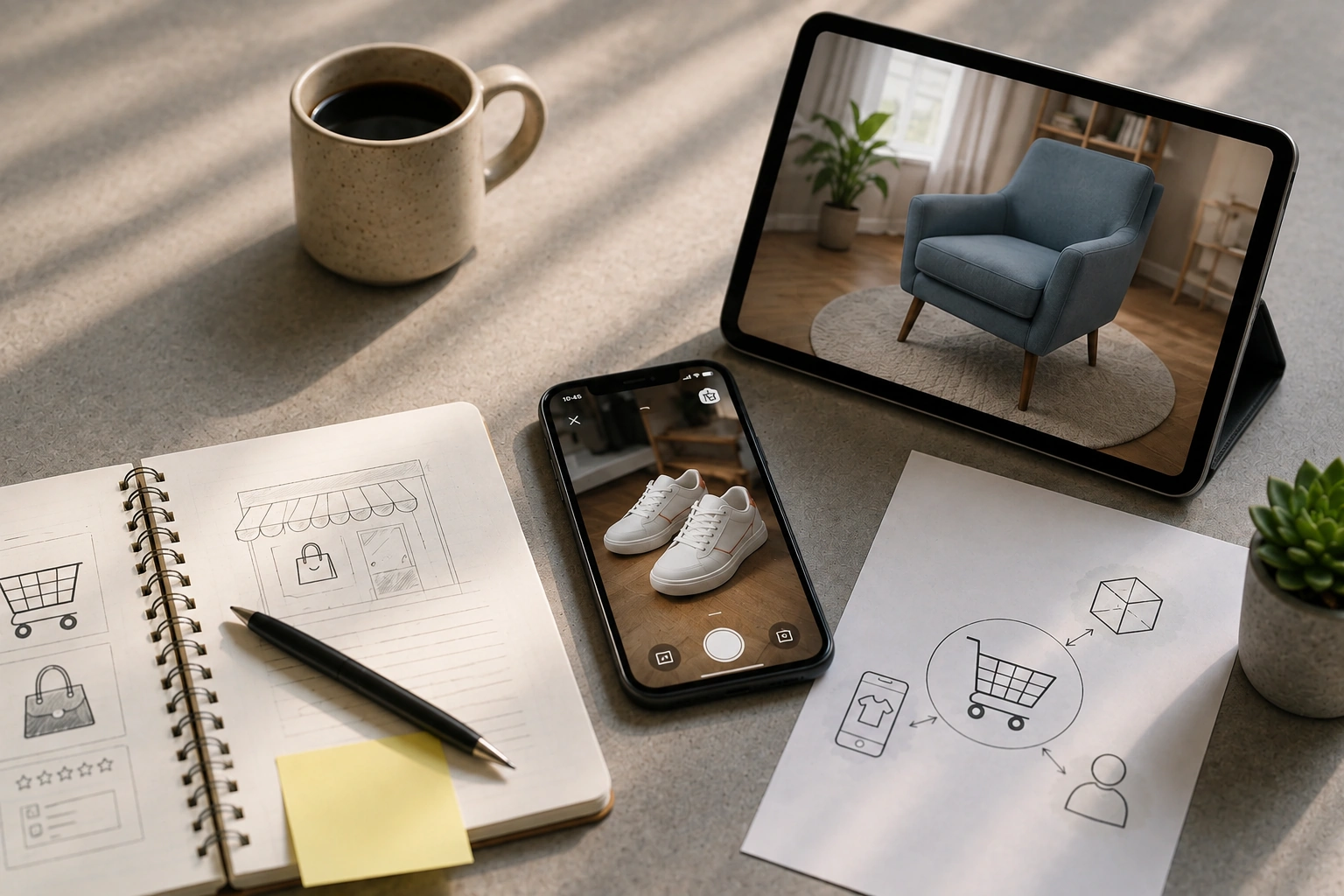
AR and VR in retail and ecommerce are helping solve one of online shopping’s biggest problems: customers can’t touch, wear, or physically stand in front of what they’re buying. The single biggest problem with online shopping has never really changed: customers can’t touch, wear, or physically stand in front of what they’re buying. Augmented reality and virtual reality are finally closing that gap, and the results aren’t just novelty engagement, they’re showing up directly in conversion rates and return rates. What used to be an experimental feature for a handful of luxury brands is becoming standard infrastructure for retail and ecommerce.
Key takeaways (The TL;DR)
- Brands offering AR-powered virtual try-ons have seen a 20% increase in sales and a 30% drop in return rates, directly tied to customers having more confidence before purchasing.
- 73% of European retailers plan to integrate AR or VR into their digital platforms within the next two years, signalling this is moving from experimental to expected.
- The two biggest applications are virtual try-on for fashion, beauty, and eyewear, and product visualisation for furniture and home decor in the customer’s actual space.
- AR/VR adoption reduces returns by closing the gap between expectation and reality before the purchase happens, not after.
Virtual Try-On Is No Longer a Novelty
Virtual try-on lets customers see how clothing, makeup, eyewear, or accessories will look on them using their phone camera or a webcam, before adding anything to cart. Brands like Levi’s, working with Snapchat’s AR tools, and Warby Parker have built this directly into their shopping experience, and the impact on purchase confidence is measurable, not just anecdotal.
The reduction in returns matters as much as the sales lift. Return logistics are expensive and often erode margin on categories like fashion and beauty far more than the original acquisition cost. A customer who’s already seen a realistic preview of how a product looks on them is far less likely to be surprised, and disappointed, once it arrives.
Product Visualisation Solves a Different Problem
For furniture, home decor, and larger physical products, the barrier isn’t fit, it’s spatial uncertainty. AR lets a customer point their phone at their actual living room and see a virtual sofa or lamp placed at real scale before buying. This directly addresses the single biggest hesitation in furniture ecommerce: not knowing if something will actually look right, or even fit, in the space it’s meant for.
Virtual Reality Is Building Full Storefronts, Not Just Features
Beyond individual AR features, some brands are building complete VR shopping environments, branded 3D stores customers can walk through, browse, and interact with products inside, sometimes with a live sales associate available through the same session. This is a meaningfully bigger investment than a try-on feature, and currently makes the most sense for premium and luxury brands where the shopping experience itself is part of the value proposition.
How AR and VR Are Changing Retail and Ecommerce in India
India’s fashion, beauty, and home decor ecommerce categories are natural early candidates for AR adoption, given how heavily online purchase decisions in these categories already depend on visual confidence. As device cameras and mobile processing power continue improving, the technical barrier to offering basic AR try-on features keeps dropping, meaning this is increasingly accessible even for brands well below the scale of the global names currently leading adoption.
According to industry research on AR and VR in ecommerce, virtual fitting rooms and immersive shopping features are moving from competitive advantage to baseline customer expectation across fashion, beauty, and home categories globally, a shift Indian brands in these categories will increasingly need to account for rather than treat as optional.
Conclusion
AR and VR in retail aren’t a gimmick layered onto an existing shopping experience, they’re solving the actual problem online shopping has always had: the inability to preview a product realistically before buying. The brands seeing the strongest results are the ones treating virtual try-on and product visualisation as core purchase-decision infrastructure, not an add-on feature. A well-executed AR and VR strategy can directly reduce return costs while increasing purchase confidence at the same time.
Frequently Asked Questions
Does AR actually reduce return rates in ecommerce?
Yes. Brands offering AR-powered virtual try-ons have reported a 30% drop in return rates alongside a 20% increase in sales, since customers have more accurate expectations before purchasing.
Which product categories benefit most from AR try-on features?
Fashion, beauty, and eyewear see the strongest impact from virtual try-on, while furniture and home decor benefit most from AR product visualisation and spatial placement features.
Is VR shopping only relevant for luxury and premium brands?
Full VR storefronts currently make the most business sense for premium and luxury brands given the investment involved, but simpler AR features like try-on and product visualisation are increasingly accessible for brands at any scale.
What’s the difference between AR and VR in a retail context?
AR overlays digital elements onto the real world through a phone or device camera, like seeing a product in your own space. VR creates a fully immersive digital environment a customer enters and explores, like a virtual store.
How complex is it to add AR try-on to an existing ecommerce store?
This varies significantly by category and platform. Fashion and beauty try-on tools have become considerably more accessible to implement than a few years ago, though full custom AR development for more complex use cases still requires dedicated technical investment.