


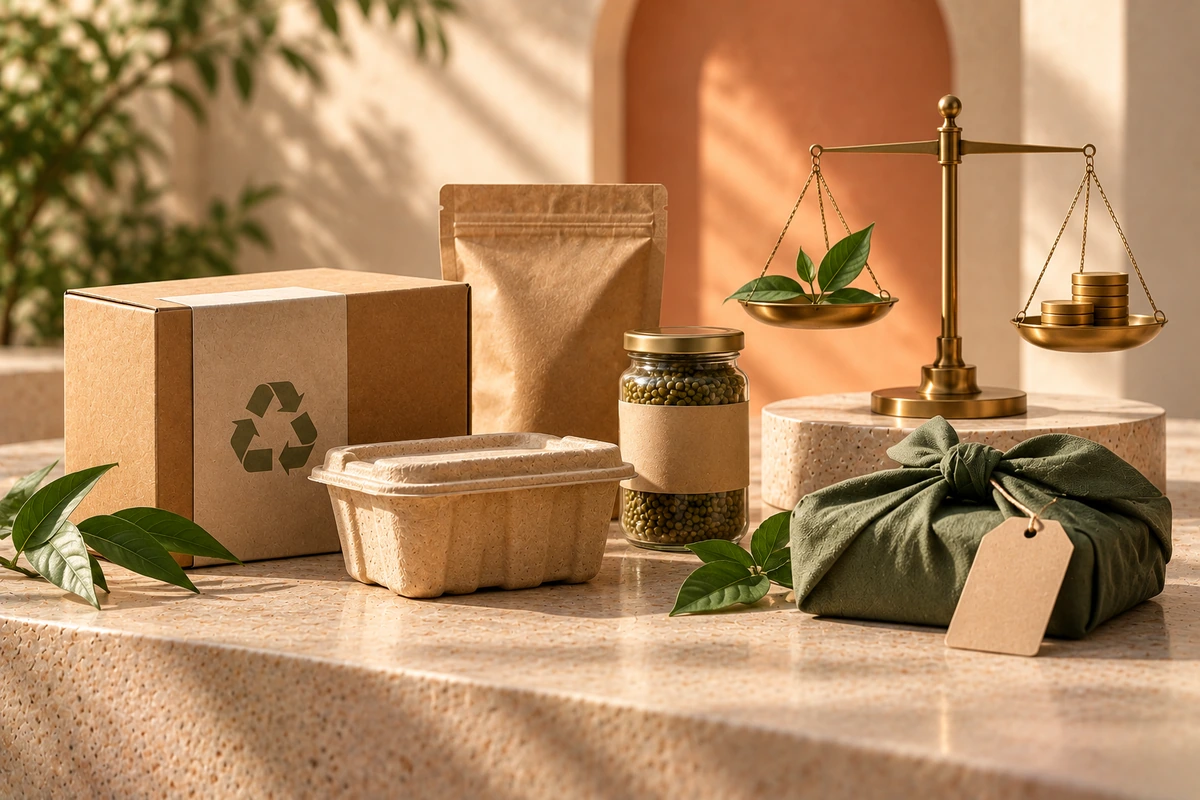
Sustainable packaging influences purchase decisions in India, but less than survey headlines suggest. Many Indian shoppers say they would pay more for eco-friendly packaging, and a 2025 McKinsey packaging survey reported that 36 percent of Indian respondents would pay a lot more and 49 percent a little more. What people say in a survey and what they put in a basket are different things, and price, product quality and trust usually decide the final choice. For brands, the practical question is not whether to care about sustainability, but how to use it so that it supports sales instead of becoming an expensive claim.
Key takeaways (The TL;DR)
- A 2025 McKinsey survey of more than 11,000 consumers in 11 countries reported that 36 percent of Indian respondents would pay a lot more for sustainable packaging, the highest share among the countries covered, and 49 percent a little more.
- Stated willingness to pay usually overstates real behaviour, so sustainable packaging works best as a tiebreaker between similar products, not as a reason to charge a large premium.
- India’s Plastic Waste Management Rules, as amended in 2026, set recycled-content targets for plastic packaging, which makes sustainable packaging a compliance matter as well as a marketing choice.
- India’s 2024 greenwashing guidelines expect environmental claims such as “eco-friendly” to be substantiated, so brands should claim only what they can prove and say exactly what the claim covers.
What Indian Shoppers Say About Sustainable Packaging
Indian consumers are among the most receptive to the idea. In the 2025 McKinsey survey, India recorded the highest share of respondents willing to pay a lot more for sustainable packaging, though a larger group said they would pay only a little more. Earlier McKinsey research found that clearer labelling of a pack’s sustainable features and better availability would encourage a sizeable share of shoppers in many countries to buy more green packaging. The signal for brands is that interest is real, but it is conditional on the product being available, easy to understand and not much more expensive.
Why Stated Intent and Actual Purchases Differ
Survey answers are cheap and a checkout is not. Shoppers in India are price-sensitive, especially in staples, snacks and personal care, and quick commerce and marketplace shoppers compare prices in seconds. A person who says they would pay more for green packaging may still pick the cheaper, familiar option when the shelf is in front of them, particularly for low-ticket repeat purchases. Packaging also competes with other things shoppers care about more, such as taste, results, brand trust, reviews and delivery speed. Treat sustainability as one more reason to choose you, not the only reason.
Where Sustainable Packaging Does Help
Premium and gifting categories
In categories where the pack is part of the product experience, such as chocolates, gifting, skincare and premium food, thoughtful and reusable packaging can raise perceived value and justify a higher price point.
Younger, urban and repeat buyers
Coverage of McKinsey’s 2025 research reported that Gen Z consumers in particular are ready to pay more for sustainable packaging, which fits D2C brands built around a values-led identity. These buyers tend to read labels and share unboxing content.
Trust and unboxing
Over-packaged parcels, excess plastic and damaged goods frustrate customers. Right-sized, protective, plastic-light packaging reduces damage and returns, so it can pay for itself even before any sustainability benefit is counted.
Packaging Is Now a Compliance Issue Too
India’s Plastic Waste Management Rules were amended in 2026. As summarised in reports on the amendment, producers, importers and brand owners face recycled-content targets for plastic packaging, with rigid packaging starting at 30 percent for 2025 to 2026 and rising to 60 percent by 2028 to 2029, flexible packaging from 10 percent to 20 percent, and multi-layered packaging from 5 percent to 10 percent. Exemptions apply where other rules, such as food-safety restrictions, bar recycled plastic. Targets and extended producer responsibility obligations are tracked through a central portal run by the Central Pollution Control Board. Check the current notified text and your own obligations with a compliance adviser, since this article is general information.
How to Talk About It Without Greenwashing
India’s Central Consumer Protection Authority issued guidelines on greenwashing in October 2024. They expect environmental claims to be backed by credible evidence, discourage vague terms like “eco-friendly,” “green” and “sustainable” without substantiation, and expect a claim to say which aspect it covers, such as the product, the process or the packaging. In practice, that means writing “pack made with 60 percent recycled paper” rather than “eco-friendly packaging,” keeping the evidence on file, and using third-party certification where it exists.
A Practical Approach for D2C Brands
Start with changes that cut cost or damage as well as waste: right-sized boxes, less plastic filler and fewer layers. Test sustainable options on a few SKUs before changing everything, and compare conversion, returns and repeat rate. Describe the change specifically on the product page, pack and listing images. Keep the premium small unless the category supports it. And make sure listings and ads on Amazon, Flipkart and quick commerce platforms use the same precise wording as the pack.
How AKOI Helps Brands With Packaging and Positioning
AKOI’s branding and communication team works on brand positioning and packaging communication, helping brands present sustainability choices clearly and credibly across the pack, product pages and marketplace listings, without overclaiming.
Conclusion
Sustainable packaging matters to Indian shoppers, but mostly as a tiebreaker and a trust signal, not as a licence to charge much more. The brands that benefit are those that make real changes, keep them cost-sensitive, meet the packaging rules and describe them precisely. Read the McKinsey research on sustainability in packaging for the wider consumer picture, and test with your own customers before committing.
Frequently Asked Questions
Do Indian consumers prefer sustainable packaging?
Surveys say yes. A 2025 McKinsey survey reported that 36 percent of Indian respondents would pay a lot more and 49 percent a little more for sustainable packaging, though stated intent usually exceeds real purchases.
Will customers pay more for eco-friendly packaging in India?
Some will, especially in premium, gifting and younger-buyer segments, but most are price-sensitive. A small premium or none, with clear communication, is safer than a large markup.
What are India’s rules on plastic packaging for brands?
The Plastic Waste Management Rules, as amended in 2026, set recycled-content targets and extended producer responsibility obligations for producers, importers and brand owners. Check the current notified text with a compliance adviser.
What is greenwashing and is it regulated in India?
Greenwashing means making misleading environmental claims. India’s Central Consumer Protection Authority issued guidelines in October 2024 that expect environmental claims to be substantiated and specific.
How should I describe sustainable packaging on a product listing?
Be specific and provable, for example the percentage of recycled material or the exact material used, and avoid vague terms like eco-friendly or green without evidence.
Does sustainable packaging reduce returns or damage?
It can, when the change is right-sizing and better protection, since over-packaging and poor packing both cause problems. Track returns and damage by SKU to see the effect for your products.