


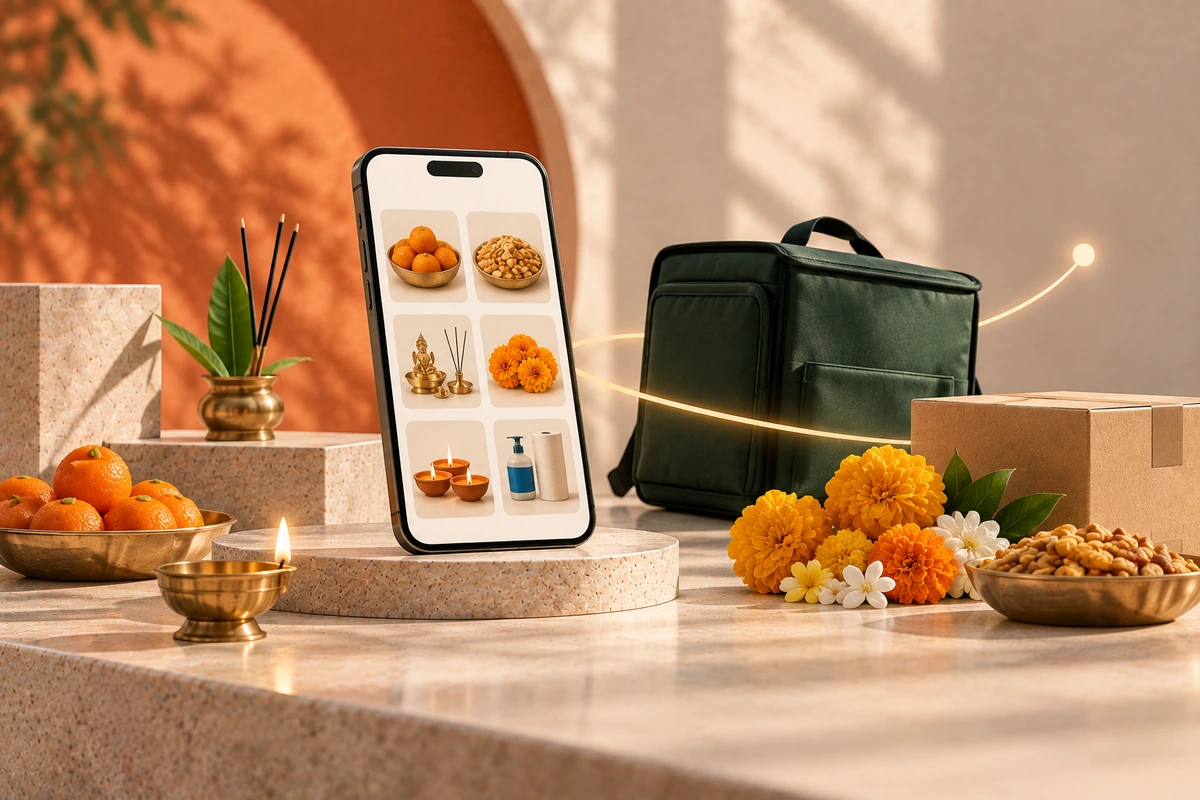
Gen Z quick commerce festive shopping is no longer a side habit: a Snapchat and GWI survey of 1,008 Gen Z internet users in India found that 61 percent buy festive essentials through quick commerce. Snacks and sweets lead at 74 percent, followed by puja essentials at 65 percent, flowers and decorations at 64 percent, diyas and candles at 61 percent, and household essentials at 59 percent. With Diwali about a month away, that is a useful signal for any brand deciding where its festive budget and stock should go.
Key takeaways (The TL;DR)
- 61 percent of surveyed Gen Z shoppers in India buy festive essentials through quick commerce, according to a Snapchat and GWI study of 1,008 Gen Z internet users.
- The most-bought festive categories are snacks and sweets (74 percent), puja essentials (65 percent) and flowers and decorations (64 percent), all of which are last-minute, low-ticket purchases.
- Gen Z plans bigger festive purchases like fashion and consumer tech in advance and asks friends and family for opinions, so quick commerce wins the urgent basket while other platforms win the planned one.
- Brands that want a share of this demand need festive-ready listings, stock at the right dark stores and ad budgets timed to the weeks before Diwali, not the final weekend.
What the Study Found
The research, run by GWI in partnership with Snapchat, looked at how Gen Z in India shops across the festive season. The quick commerce finding is the headline, but the split matters more than the single number. Gen Z uses quick commerce for the items a festival suddenly demands: sweets for guests, puja items, flowers, decorations, diyas and candles, and household top-ups. These are small, urgent and often forgotten until the day before. The same study shows a different pattern for bigger purchases. Fashion shoppers tend to plan ahead or mix planned and spontaneous buying, and consumer tech buyers lean on friends and family for advice and research well before they pay. Different categories, different journeys.
Two cautions are worth stating. These are survey responses from internet-using Gen Z, not platform sales data, and the sample is 1,008 people, so the figures describe a tendency rather than market share. Read them as a direction of travel, not a forecast.
Why Quick Commerce Wins the Festive Essentials Basket
Festive essentials share three traits that quick commerce handles better than almost any other channel. They are needed on a deadline, they are cheap enough that the buyer will not shop around, and many are perishable or bulky, like flowers and sweets. A shopper who realises on the morning of a puja that something is missing does not open a marketplace and wait two days. They open Blinkit, Zepto, Swiggy Instamart, Amazon Now, Flipkart Minutes or BigBasket and expect it in minutes. For a young shopper already comfortable with these apps for everyday needs, using them for the festival is a natural extension.
What This Means for Brands
Be on the shelf before the rush
Festive demand on quick commerce is concentrated, and stock is local. A product that is out of stock at the dark stores serving a dense Gen Z neighbourhood loses the sale to the next brand on the page. Plan inventory by city and pincode for the weeks before Diwali, and keep fill rate high when demand peaks.
Make festive listings easy to choose
Gen Z is picking quickly, so the listing has to do the work: a clear festive pack or gift set, images that show the product in a festive context, and pack sizes that clear free-delivery thresholds. Bundles such as sweets with decorations or a puja kit fit the way these baskets are actually built.
Time ads to the planning window, not the last night
Because larger festive purchases are researched and planned in advance, brand awareness needs to start early, with quick commerce ads and sponsored placements ramping through the weeks before the festival and holding through the final days. Brands that switch on ads only in the last 48 hours pay peak prices for the last scramble.
Do not treat Gen Z as one shopper
The same person may buy diyas on a quick commerce app in ten minutes and spend weeks researching a phone with friends. Match the channel to the category: urgent, low-ticket items on quick commerce, considered purchases on marketplaces and social, where peer opinion carries weight.
How AKOI Helps Brands Capture Festive Quick Commerce Demand
AKOI’s quick commerce marketing team plans festive campaigns across Blinkit, Zepto, Swiggy Instamart, Amazon Now, Flipkart Minutes and BigBasket, with listings, bundles and category ads tuned to each platform and to the pincodes where demand is concentrated. The focus is on keeping products available and visible at the moments Gen Z is actually buying, and on measuring results by sales and return on ad spend, not impressions.
The Bigger Picture
The shift in this research is that quick commerce is becoming part of the festival itself, not just a daily convenience. Research firms such as GWI that track what audiences say they plan to do are a useful early read, but the real test is in your own platform data. Brands that treat the next four weeks as a festive-quick-commerce window, and prepare stock, content and ads for it, will be better placed than those that wait to see what happens.
Frequently Asked Questions
What percentage of Gen Z uses quick commerce for festive shopping?
A Snapchat and GWI survey of 1,008 Gen Z internet users in India found that 61 percent buy festive essentials through quick commerce.
Which festive items does Gen Z buy on quick commerce?
The survey lists snacks and sweets (74 percent), puja essentials (65 percent), flowers and decorations (64 percent), diyas and candles (61 percent) and household essentials (59 percent).
Does Gen Z buy fashion and electronics on quick commerce too?
The study points to a different pattern for bigger purchases. Fashion and consumer tech buyers tend to plan ahead and ask friends and family for opinions, so those journeys are longer than a quick commerce order.
When should brands start festive campaigns on quick commerce?
Ideally several weeks before the festival. Awareness and ads should build through the planning window and hold through the final days, rather than starting in the last 48 hours.
Which quick commerce platforms should festive brands be on?
The main ones are Blinkit, Zepto, Swiggy Instamart, Amazon Now, Flipkart Minutes and BigBasket. Which matters most depends on your category and the cities you sell in.
How reliable are survey figures like this for planning?
They show direction, not market share. They come from self-reported answers from a limited sample, so check them against your own sales and ad data before changing your budget.