


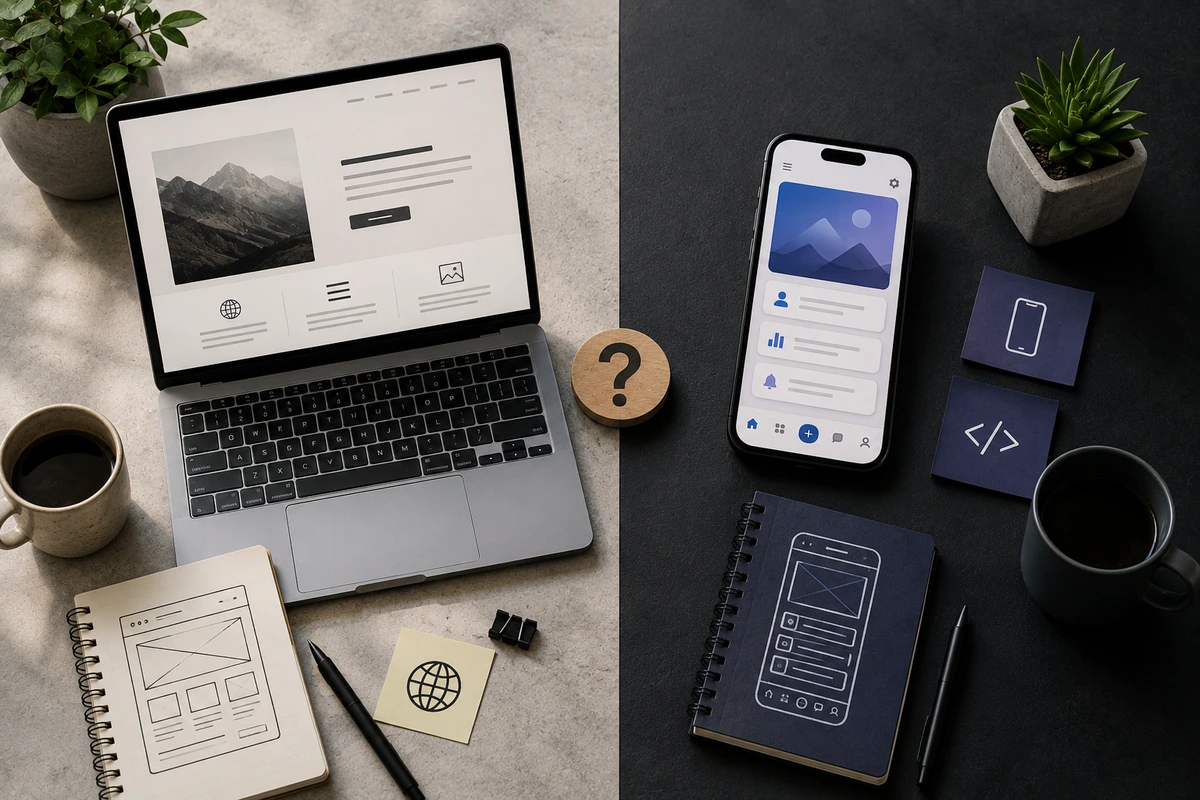
Website development vs app development is one of the first real budget decisions a growing business has to make, and getting it wrong can be expensive. Website development vs app development is one of the first real budget decisions a growing business has to make, and getting it wrong is expensive. A website is usually the faster, cheaper starting point since it works across every device without an install, while a mobile app earns its cost once you need repeat engagement, offline access, or features like push notifications that a browser cannot fully replicate. The right choice depends less on what feels modern and more on how customers actually reach you.
Key takeaways (The TL;DR)
- A website is almost always the right first move for discoverability, since it is what shows up in Google search results and what people expect to find before they trust a brand enough to download anything.
- A mobile app earns its cost only when customers need to come back often, multiple times a week, not just once or twice a year, since infrequent use rarely justifies the install.
- Website development typically costs a fraction of native app development and takes weeks rather than months, since there is no app store review process and no need to build separately for iOS and Android.
- Most scaling businesses eventually need both, but building them in the wrong order wastes budget on features customers were never going to use in year one.
This used to be a simpler question. With mobile browsers now doing almost everything an app can do, and app store fees and review delays adding real friction, founders are asking it more often, not because apps got worse, but because websites got a lot better and 2026 budgets are tighter.
What a Website Actually Does for Your Business
A website is your business’s address on the internet. It is what search engines index and what people land on from a Google search or a social bio link, without installing anything first. For most businesses still building brand awareness, that reach matters more than depth of engagement. A well-built website loads instantly, works identically across phones and laptops, and updates the same day without waiting on app store approval. What it cannot do is match a native app’s offline depth or reliable push notifications, but for a business focused on visibility and converting cold traffic, that rarely matters yet.
What a Mobile App Actually Does for Your Business
A mobile app is built for people who already know you and choose to keep you on their home screen, a meaningfully different relationship than a website visitor. Apps unlock what a browser genuinely cannot: full offline functionality, camera and sensor access, and dependable push notifications. That is why categories like food delivery and banking lean so heavily on apps, since the use case is frequent and habitual. The cost is real too. Native development usually means building separately for iOS and Android (or using a cross-platform framework like Flutter or React Native), plus app store review, plus convincing someone to install before they have used the product once. That install-intent gap is the biggest reason apps built too early underperform.
Website Development vs App Development: A Quick Comparison
| Factor | Website | Mobile App |
| Discoverability | High, indexed by search engines | Low without existing brand awareness |
| Typical build time | Weeks | Months, longer for iOS and Android separately |
| Offline access | Limited | Full, if built for it |
| Push notifications | Browser-dependent, less reliable | Native and dependable |
| Update process | Instant, no approval needed | Requires app store review |
| Best suited for | New or growing brands, first-time visitors | Frequent, repeat, habitual users |
When Do You Actually Need Both?
Most businesses that scale past their first couple of years eventually need both, but the order matters. An ecommerce brand generally needs a fast, well-optimized website first, since that is where paid ads, SEO, and social traffic land. Once that brand has customers ordering weekly or monthly, an app starts making sense, lifting reorder rates through push notifications and a faster, saved-details checkout. Building the app before the website has proven demand is where most wasted budget comes from. A simple test: if most customers find you for the first time through search or social, start with the website; if you have real evidence of weekly repeat use or a genuine need for offline access, that is what justifies the app.
How AKOI Approaches This Decision
AKOI’s website development team builds fast, responsive sites designed around conversion and search visibility, working alongside AKOI’s mobile app development team on iOS, Android, and cross-platform builds once a brand has the repeat-usage data to justify one. Because the same team also runs marketing for many of these brands, the recommendation comes from what is actually driving traffic, not a default answer applied to every client.
There is no universal right answer here, only a right answer for where your business is today. A new or growing brand almost always gets more value from a well-built, fast-loading website first, since it captures the traffic everything else depends on. Google’s own guidance on Core Web Vitals is a useful reminder too: a slow, poorly optimized website will underperform a mobile app regardless of which one you choose to build, so build whichever comes first properly before adding the next. Website development vs app development isn’t ultimately about choosing the more modern technology; it’s about choosing the platform that matches how customers discover and use your business.
Frequently Asked Questions
Should a new business build a website or an app first?
A website first, in almost every case, since new businesses need to be discoverable through search and social before an app has anyone to bring back.
Is it cheaper to build a website or a mobile app?
A website is almost always cheaper and faster to build, since app development means building for iOS and Android (or using a cross-platform framework) plus app store review.
Can a website do everything a mobile app can do?
Not quite. A website can come close with modern browser features and caching, but it cannot fully match a native app’s offline reliability, camera and sensor access, or dependable push notifications.
Do ecommerce brands need both a website and an app?
Most eventually benefit from both, but the website comes first since it captures search, social, and paid traffic; the app makes sense once there are enough repeat customers to benefit from it.
How do I know if my business is ready for an app?
Look at actual usage frequency, not intent. Weekly or biweekly repeat use, or a genuine need for offline access or device-level features, usually justifies it; occasional or seasonal use rarely does.
How long does it take to build a website compared to an app?
A well-built business website typically takes a few weeks from design to launch. A native app usually takes several months, especially if built for both iOS and Android with a full testing and review cycle.