


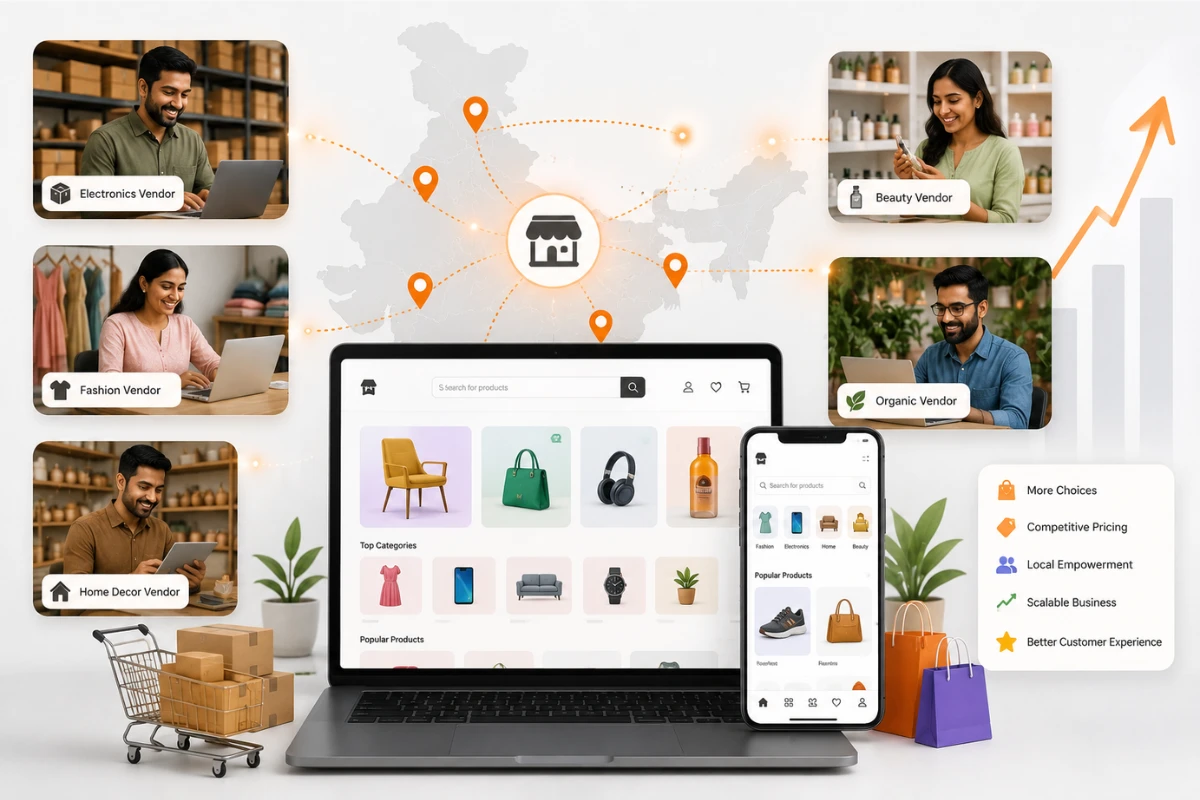
The digital market in India is currently undergoing a significant transformation in shopping habits and business conduct. Millions of consumers from Tier 2, Tier 3, and rural India now have access to affordable internet. As a result, shopping habits are changing, and marketplace-based business models are growing faster than traditional online stores. At the heart of this revolution is the multi-vendor ecommerce model, which allows more than one seller (wholesaler or manufacturer) to post and sell products on a single website. Due to shifting shopper needs, continued government support, and a mass migration from offline to online across the country, the multi-vendor model is expanding with unparalleled momentum throughout India.
Understanding the Marketplace Ecosystem
A multi-seller platform works in many ways that are not like a normal e-commerce store. The best way to look at this type of platform is as a digital shopping centre or mall. Each individual seller will have their own seller’s name, product price and quantity of products sold but generally use the same technology for things like payment processing, finding new customers and processing orders. The end result is a big successful e-commerce marketplace that connects sellers in different parts of India to buyers (customers) throughout India.
A modern ecommerce shopping website allows customers to compare products, make secure payments, and enjoy a seamless shopping experience. People can shop for clothing, electronics, grocery items, and crafts made by local artisans from anywhere in India in a single shopping experience. This type of extensive product offering encourages shoppers to return to the website and keeps the cost to acquire new customers lower. By eliminating the high technological barriers that once prevented small business retailers from competing on a national level, digital marketplaces have enabled any regional seller to enter a larger national market.
Reason Behind the Expansion in India
The rapid growth of this collaborative commercial model throughout India is not by chance. Several solid economic reasons, along with tangible benefits for buyers and sellers, are fueling the phenomenal growth.
Competitive Pricing and Variety of Products
With thousands of merchants on these e-commerce platforms, buyers have an infinite selection of products. If you need local fabric, unique tools, or budget-friendly items for your home, there’s one website to find it all. This creates competition among merchants for comparable products, leading to fair pricing and transparency for buyers.
Low Risk for Owners
It is a scalable model, as the platform owner does not need to maintain large amounts of inventory or extensive warehousing to operate a website. Each vendor manages their inventory. The main business can thus rapidly increase its operations without concern about excess inventory or high storage costs.
Enabling B2B Digital Change
This growth is also present in the b2b sector. Many manufacturers are now adopting a b2b ecommerce website to streamline procurement and distribution. This new b2b Marketplace will enable manufacturers, wholesalers, and retailers to leverage existing networks to digitize large orders, manage GST invoices, and improve supply chain efficiency across multiple states.
The major driver of this growth has been governmental programs, including ONDC. The development of open networks has created tremendous opportunities for small and traditional businesses to move quickly and easily into the digital economy without expending much in terms of technology.
Overcoming Operational Challenges Through Smart Technology
When you manage an extensive digital network with thousands of active buyers and sellers, there are many challenges. Owners of the platform need to address issues such as how to onboard vendors smoothly, format product catalogs properly, and automatically split payments between multiple merchants in real time. Additionally, maintaining consistent product quality and reliable shipping from multiple suppliers is imperative to keeping buyers happy.
The right technology is critical in order for companies to stay ahead in their respective markets now more than ever. As advanced building platforms, automated shipping systems, and clear data-tracking tools have become the standard for businesses wishing to lead their market, this technology has enabled multi-vendor ecommerce solutions to operate successfully. Smart analytics can be used to measure vendor performance and better display products on search engines, ensuring that the multi-vendor ecommerce solution remains successful and remains safe from fraud, with an enjoyable, seamless shopping experience from the first click through to delivery at the buyers’ doorstep.
Conclusion
The emergence of the multi-vendor eCommerce model will drastically revolutionize retail & wholesale commerce in India. By providing everyday consumers with an exceptional variety of products and empowering local and small sellers, these platforms are creating a win-win scenario for all parties involved. The internet will continue to grow in size and functionality, whereas reliance on shared online marketplace solutions will strengthen. Businesses that invest the time and resources to create scalable, secure, and user-friendly solutions now are preparing to capture a large share of the internet economy.
AKOI is a leading digital agency that assists brands in developing, marketing, and growing their own successful online marketplace and direct-to-consumer store across India.
Looking to launch or scale your online marketplace? Contact AKOI today to build and grow a successful ecommerce platform tailored to your business goals.